DROdio.com

Armory

Explore Daniel R. Odio’s writing, videos, lessons, and shipped work about Armory.

13 items

Inc. Magazine #Vanlife

You think remote work means your couch, but this CEO ran Armory from a van on a cross-country trip—and Inc. Magazine profiled how he pulled it off without his company falling apart. You'll see what infrastructure actually matters when you strip everything else away.


Illustration for Welcoming Armory's Next CEO

Welcoming Armory's Next CEO

You think you can do it all yourself, but this shows why that's a trap: DROdio built Armory from his garage to serving JPMorgan Chase, then deliberately hired a CEO with scaling experience he didn't have. The move from founder-CEO to Chairman isn't failure — it's how you avoid becoming your company's bottleneck.

Illustration for Using Technology to Support a Small Town Fire Department

Using Technology to Support a Small Town Fire Department

You think you know how to 'help with tech,' but this shows you the gap between tinkering and actually shipping something that matters. DROdio didn't build custom software—he just set up a Patreon page that creates recurring revenue for a fire department that can't afford defibrillator pads, and you'll see why that choice was smarter than overengineering.

Illustration for Distributed Work: Do the best work of your career

Distributed Work: Do the best work of your career

You've tried remote work but probably haven't thought about *where* you'd actually be most productive if geography didn't matter. This post breaks down the specific tools (including Starlink hitting 50-150Mbps in rural areas) that are eliminating the "bad connection" excuse, and challenges you to answer: where would you do your best work?

Illustration for What is Your Leadership Brand?

What is Your Leadership Brand?

You've probably been copying leadership styles that don't fit you, wondering why it feels forced. This post breaks down why there's no single "right" way to lead, how external factors like peacetime vs. wartime change what works, and gives you a concrete method to identify and leverage your actual superpower instead of burning out pretending to be someone else.

How Much Do Relationships, Trust, & Fulfillment Matter in the Workplace?

You've hit a wall with a manager or teammate and you're stuck rehashing the same surface-level arguments. This article breaks down why facts don't resolve conflict — the human experience of those facts does — and introduces the three deeper issues (power, care, respect) that actually drive workplace friction, so you can finally move past the loop.

Illustration for Execs and Managers: An Engineer's perspective on Roundabout Culture

Execs and Managers: An Engineer's perspective on Roundabout Culture

You've probably felt the friction of command-and-control structures but assumed it's just how big companies work. This engineer's story shows you the hidden cost: people who could be shipping innovation instead do the minimum and job-hunt. If you're stuck between 'move fast' mandates and rigid approval chains, this explains why you can't have both.

Illustration for Powering the Third Industrial Revolution (aka Why I Go to Work Every Day)

Powering the Third Industrial Revolution (aka Why I Go to Work Every Day)

You've probably never thought about deployment pipelines as world-changing infrastructure, but this piece connects the dots from "my feature is stuck in staging" to "humanity's quality of life is accelerating." It reframes the technical problems you're wrestling with as part of something orders of magnitude bigger.

Illustration for Armory's Manifesto

Armory's Manifesto

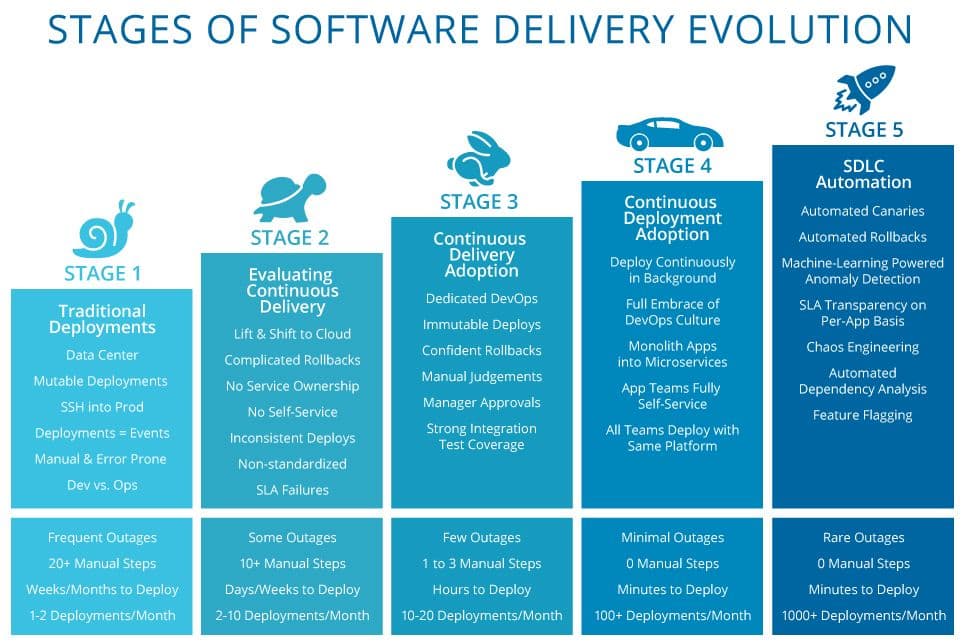
You'll recognize exactly which stage your company is stuck in — probably Stage 2 or 3, where you're 'evaluating' Kubernetes but deployments still feel like walking a tightrope — and see what the path forward actually looks like when you stop half-stepping. This breaks down why your deploys are still scary and what changes when you finally commit to immutable infrastructure and real DevOps culture.

Illustration for A great way to interview consumers

A great way to interview consumers

You think you already know what your users need, but this tactical playbook—gift cards at Starbucks, 10 interviews an hour—forces you to confront whether your assumptions actually hold up when real people touch your prototype. The basketball analogy nails why founders fixate on the wrong solutions when they skip this step.