The ARCI Framework for Decision Making (aka RACI)

FounderCulture is improving the odds for Founders • Become a Patron to support us.
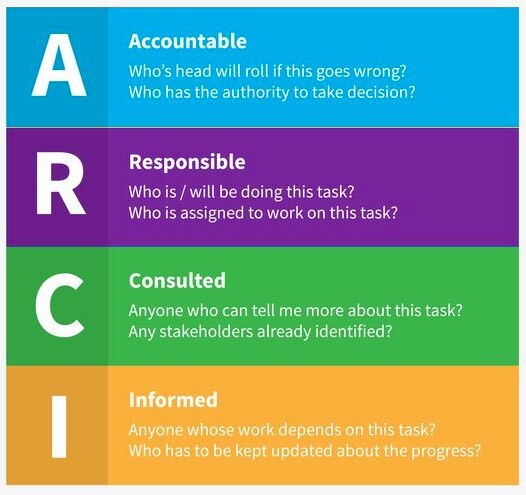
💡 Everyone says "RACI" because it sounds better, but we like to call it the "ARCI" framework because "Accountability" is the top level. We've repositioned the rows as ARCI in the image below.
The RACI Framework is a valuable tool for helping differentiate between different stakeholders in a project, and providing clarity on who's in which roles. A very valuable part of ARCI is differentiating between those who are Accountable for outcomes vs. those who are Responsible for getting the work done.
💡On Accountability vs. Responsibility: Individual contributors often think they're the same thing, but they're very different. More on that below.
Sailing Analogy:

You're on a sailboat and you need to get to a destination:
"Accountable" is for outcomes:
- The boat's ⛵ Captain is ultimately accountable for ensuring the crew reach the destination safely — for successfully achieving the outcome.
"Responsible" is for tasks:
- Since the ⛵ Captain is accountable, s/he is also by default responsible for all the tasks required to achieve that outcome.
- But a smart ⛵ Captain will delegate responsibility to other members of the crew for some (or all!) of those tasks.
- Some tasks might include things like:
- Feeding the crew
- Ensuring the comfort of the crew
- Navigating the boat
- Doing the night watches
- Trimming the sails
- Etc… the responsibility list is endless
The important thing to note here is that the Accountable party is not, by definition, the only one who must be Responsible for doing the actual work.
While the Accountable party has ownership over ensuring the success of the outcome, and so by default also holds all the responsibility for ensuring the tasks are done to achieve that outcome, smart people know when to delegate as much of that responsibility as possible to scale their impact.
⚠️ This is where employees (often more junior employees) make a mistake: They assume that if they are Accountable, they must also be Responsible for everything, and try to do it all.
The reality is it's the reverse: Ideally, the Accountable party will marshall the right resources to be Responsible for the work and focus on ensuring that work gets done in efficient ways across the organization. Executives tend to be very good at being accountable while making their teams responsible — it's a way to scale yourself.
💡Pro-tip: Here's a great way to be Accountable while making others Responsible: Ask lots of questions! Ask the Responsible party things likewhat do you think is the #1 priority item that needs to get done right now?AndCan you provide me your plan on how you're going to get [x], [y] and [z] done? I'll review it and give you feedback.
Defining specifically who is Accountable vs. Responsible, and what the difference is, can help more junior employees grow their management and leadership skills, so long as they are willing to let go of getting the actual work done and focus on enabling others to learn & build skills through guidance, management and leadership.
In our sailing analogy, the ⛵ Captain might delegate responsibility for feeding the crew to another person, designated the 👩🍳 Chef.
From the ⛵ Captain perspective, the 👩🍳 Chef is responsible for that task.
But from the 👩🍳 Chef's perspective, s/he is now accountable for ensuring a well fed crew.
- And now the 👩🍳 Chef might designate some of the responsibility of feeding the crew to others, like the 👨🍳 junior Sous Chef, who might be responsible for making all of the breakfasts.
Whether an objective is referred to as "accountable for the outcome" or "responsible for the tasks required" to ensure that outcome depends on the perspective of the person you're asking. There's an infinite nesting loop here.
"Consulting" is for stakeholder buy-in:
- The 👩🍳 chef might want to consult the crew to understand what food to provision for the trip, because that will enable the chef to better achieve their accountable outcome of a well fed crew.
"Informing" is for information free flow:
- The ⛵ captain might inform the crew that a storm is coming on the horizon, so they can better prepare the boat to weather that storm.
Building ARCI into your workflow:
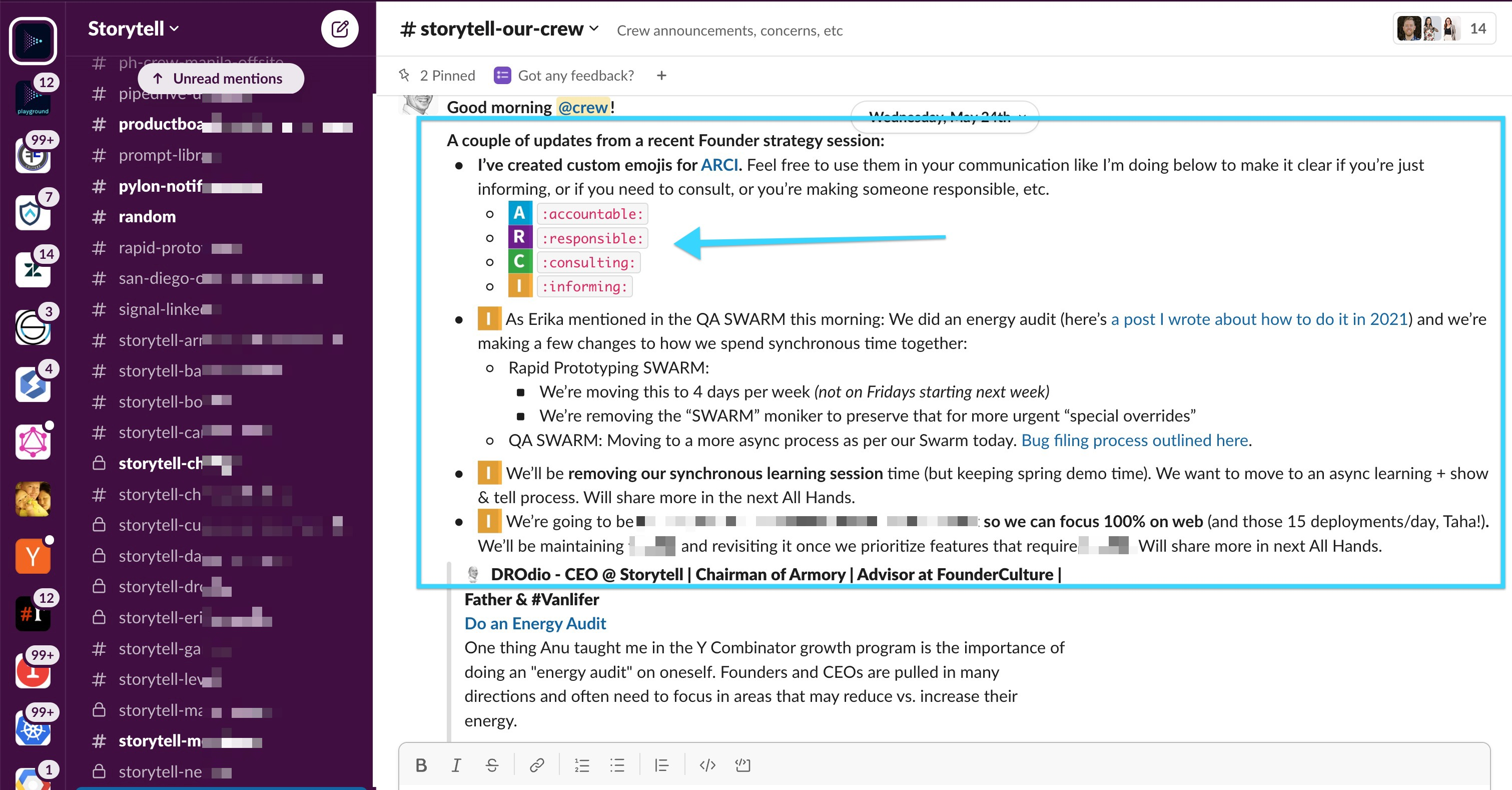
ARCI works so well that at Storytell, we've built it into our Slack workflows. We created custom emojis for each item as described here in a post to the Storytell crew:
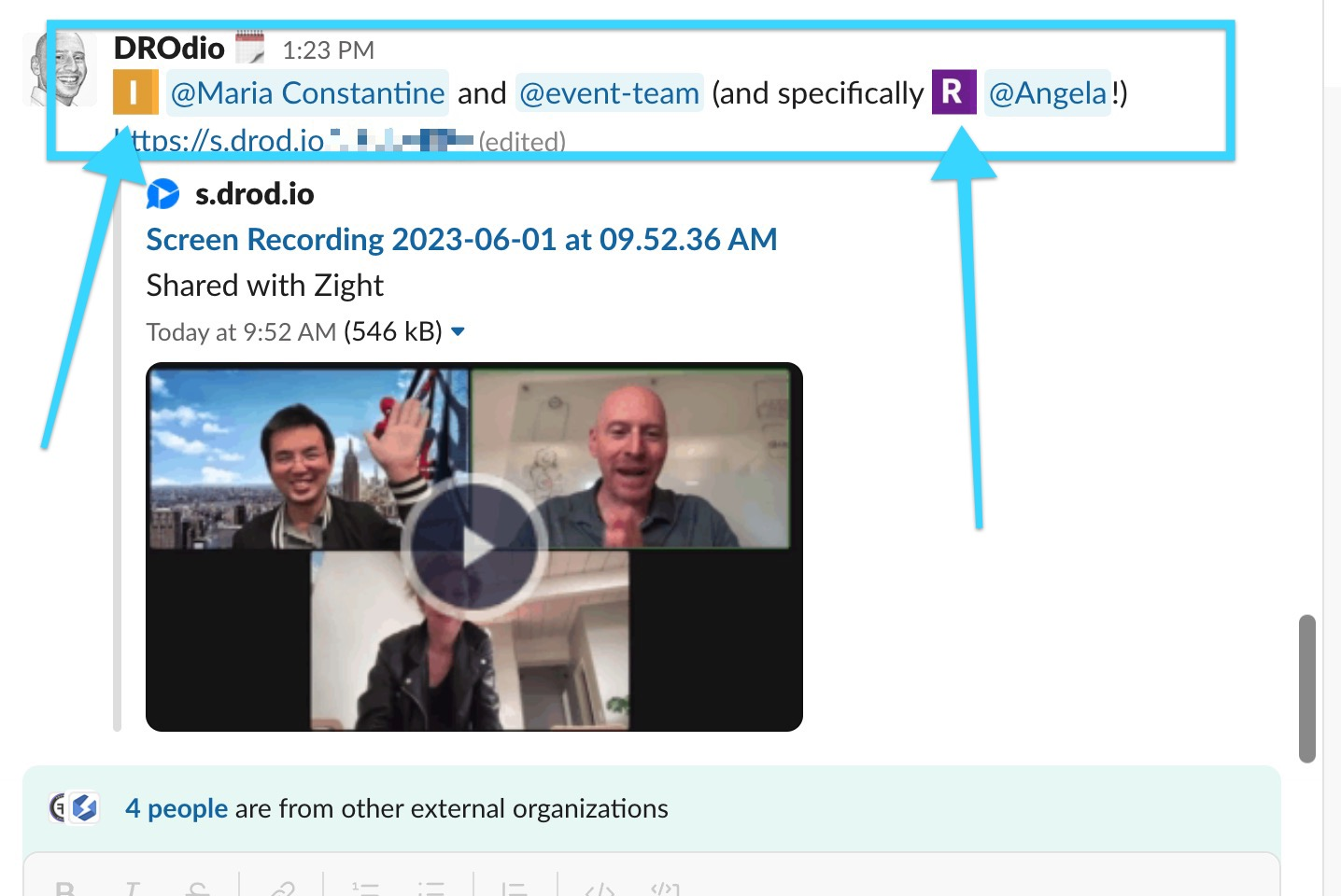
Here's an example where I'm "Informing" Maria while tasking Angela as "Responsible" in a Slack message:
Related Content:
Here are some posts with frameworks to help resolve conflict within your team when things don't go smoothly:
- Asking "Is This Safe to Try?" for Decision Making
- Related:Type 1 vs. Type 2 Decisions
- The Three Levels of Conversation
- The Action/Impact Framework
- The Active Listening Framework
About FounderCulture: Only 1 of every 200 seed-funded startups make it to a $1Bn valuation. FounderCulture exists to improve those odds for Founders worldwide by removing the friction of founding and scaling venture-backed companies. We are building a trusted community to share knowledge with authenticity and vulnerability among Founders. FounderCulture is created by Founders, for Founders. Learn more about FounderCulture:
- Welcome to FounderCulture
- Why Founders Need FounderCulture
- Our Vision, Mission, Strategy, Values
Become a Patron if you'd like to see us create more content like this for Founders:
- Support FounderCulture: Become a Patron, Buy an NFT or send BTC/ETH .
- Thank you, FounderCulture Sponsors
Public Link to this doc: http://go.founderculture.net/RACI