The Critical Skill Your Company Isn't Teaching You: Navigating AI's Jagged Intelligence
AI's jagged intelligence spikes and craters unpredictably—superhuman at pattern recognition, terrible at ambiguity. Learning to navigate these edges is the critical skill companies aren't teaching, yet it's what separates those who thrive with AI from those who fight it.

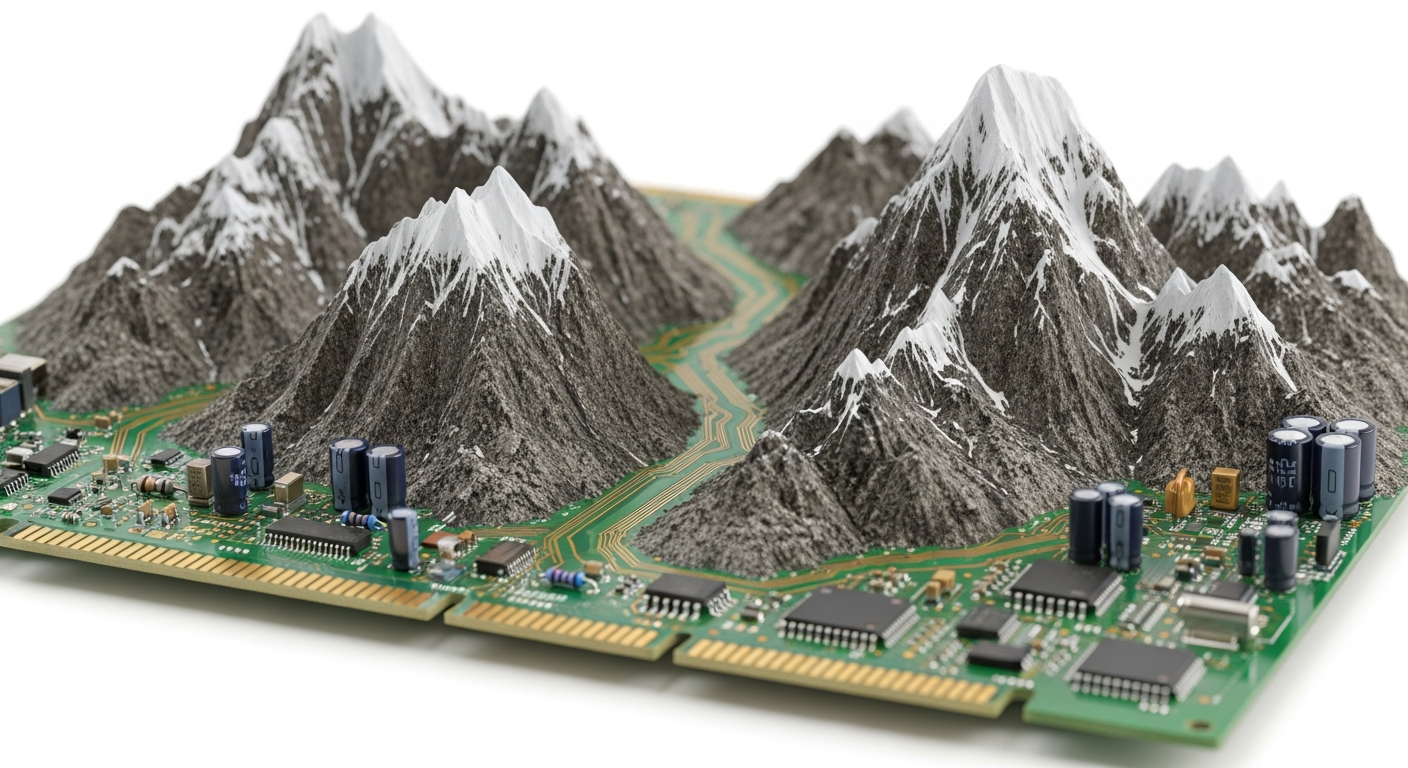
AI has what researchers call "jagged intelligence"—capabilities that spike and crater in ways that don't match human intelligence at all. It can analyze 10,000 customer reviews in minutes but miss obvious sarcasm. It can generate code faster than any developer but produce solutions that are subtly, dangerously wrong.
Knowledge workers needing to learn to "speak AI" isn't a bug that gets fixed in the next model. It's fundamental to how these systems work. If you're trying to use AI without understanding this jaggedness, you're essentially operating heavy machinery blindfolded.
Here's what hit me while watching how people use AI tools (and vibe coding in Cursor myself): The way AI agents execute tasks mirrors human intelligence in a weirdly profound way... until it doesn't.
An agent gets spun up, executes a task quickly, does it cost-effectively. That's basically the same thing you do every time you complete a focused task at work. Both humans and AI excel at execution when context is clear, they have the necessary domain expertise, and the problem is well-defined.
Another similarity: You probably have no idea what's going on in other teams or departments you don't interact with often. Just like Bob in Finance has no idea what Mary in sales is doing. As AI agents get better at planning and delegating tasks to sub-agents, they too have zero context about what the other agents are doing.
But here's where understanding the difference becomes critical: Humans carry a massive overhead cost that we barely acknowledge: Gaining (or re-gaining) context.
Every time you get pulled out of deep work by a Slack message, or switch from writing code to reviewing a budget, or pivot from a product roadmap to a customer crisis, you're paying the context tax. Studies suggest it takes 23 minutes on average to fully regain context after an interruption.
Here's what's different about this alien AI intelligence: When you direct an agent to go understand what other sub-agents have done, it can very quickly consume vast amounts of information to get up to speed in a superhuman way. Image expecting Bob to synthesize in 30 seconds all of Mary's deal flow and identify the deals most likely to miss the quarter. He couldn't do it.
This jagged intelligence means AI is siloed, unaware and terrible at maintaining long-term context across complex, evolving situations. Just like humans. But AI can gain fast amounts of context in seconds when directed to do so. Very much unlike humans.
Here's another similarity that reveals a crucial difference: decisions are expensive for both humans and AI—but in completely different ways.
For humans, decision fatigue is real. Every choice depletes cognitive resources. Should I respond to that email now? Which feature should we prioritize? Do I need to escalate this issue? By 4pm, we're making demonstrably worse decisions than we did at 9am. The cost of decisions compounds throughout the day.
AI has a similar problem expressed differently. When you call an LLM to make a decision—to route a task, to choose between options, to plan next steps—that's computationally expensive. Token usage adds up. Latency matters.
Here's the jagged part: AI can make thousands of low-stakes decisions without fatigue (superhuman), but it struggles with ambiguous, high-stakes decisions where context, culture, and competing values matter (subhuman).
You need to know and understand where AI's jagged edges are so you can work with them effectively.
After building AI tools and watching thousands of people use them, I've started thinking about four distinct zones:
Zone 1: AI Superhuman
- High-repetition tasks
- Pattern recognition at scale
- Instant context switching between discrete tasks
- Processing massive volumes of information
- Structured analysis and synthesis
Zone 2: AI Competent (With Human Oversight)
- First drafts and ideation
- Research synthesis
- Code generation
- Data structuring
- Routine decision-making with clear parameters
Zone 3: AI Struggles
- Ambiguous problems with no clear right answer
- Long-term context across weeks or months
- Reading social and political dynamics
- Ethical decisions with competing values
- Knowing what information actually matters
Zone 4: AI Fails
- Relationship building and trust development
- Strategic decisions under radical uncertainty
- Creative leaps that defy patterns
- Situations requiring lived experience
- Knowing when to break the rules
If you understand these zones, you transform how you work:
Stop fighting AI on Zone 1 tasks. Seriously. If you're manually doing high-repetition, context-switching work that AI excels at, you're not being noble—you're being inefficient. Let it go.
Embrace AI as a thought partner in Zone 2. Use it for first drafts, research, analysis. But maintain oversight. Check the work. Bring judgment. This is where the multiplication happens.
Keep humans firmly in control for Zones 3 and 4. Don't ask AI to make your hard decisions. Don't expect it to navigate office politics. Don't assume it understands what matters. These are human zones, and they're not going away.
The people who thrive in the AI era won't be the ones with the best prompts or the most tools. They'll be the ones who deeply understand this jagged intelligence landscape—who instinctively know when to leverage AI's superhuman capabilities and when to trust their own human judgment.
We are building Storytell to help make this easy for humans. Not just "AI that helps you work" but systems designed around this jaggedness, like queryable Concepts that handle context differently, the ability to spin up fleets of specialized agents that can use skills and tools and know when to escalate to human judgment, agents that execute in their zone of genius while humans maintain strategic oversight.
Start mapping your work to these zones. You can try making a list: What are you doing that's Zone 1 (AI superhuman) that you should automate immediately? What's Zone 2 where AI could multiply your output with oversight? What's Zone 3 or 4 that you need to protect as human territory?
The companies and individuals who win are going to be the ones who understand the terrain best, know exactly where AI's intelligence spikes and where it craters, and who design their work accordingly.